Grassroots sport loses as Shoalhaven facilities crumble.
By Parri Barrel
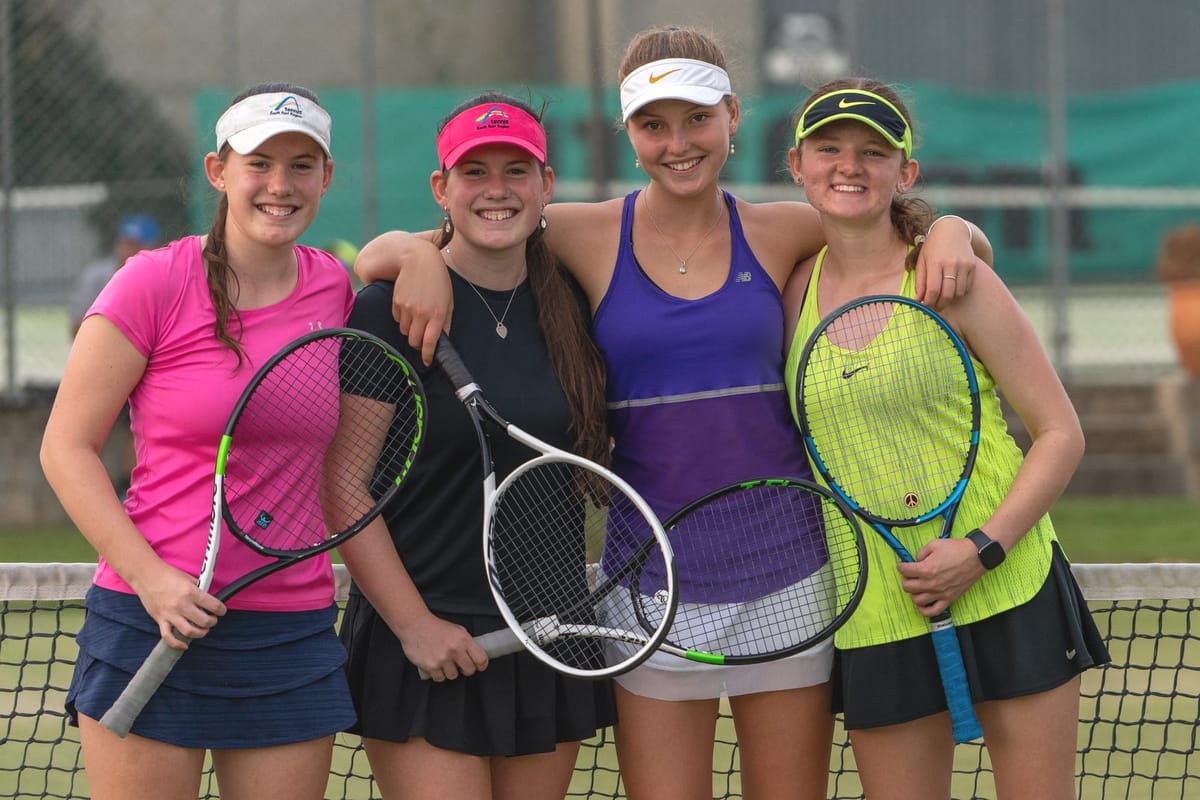
Vicki Pritchard was just eight years old when her lifelong love of tennis began. While still a high school student, Vicki became secretary of the Shoalhaven District Tennis Association (SDTA) and she has held that position ever since.
Built in 1985, the courts at Bomaderry's Narang Road tennis centre are as much her home as they are her workplace.
"I'm not allowed to retire because the club gave me a life membership last year," Vicki jokes.
"I only have Tuesdays off because that's when I play comp, and it's just too hard to get back."
By the age of 19, Vicki and her husband Mark took over the tennis coaching academy, which currently has 100 students and a junior competition for 45 players aged 8 to 18.
Among the Pritchards' most elite alumni are professional tournament player Ellen Perez and their eldest son, Mitchell, who played USA Division 1 college tennis.
But Vicki and Mark have long since lost count of the number of children they have coached and mentored over the decades.
I know their influence well, because I was one of those tennis-mad kids joining the Pritchards’ minibus trips to tournaments around the state — our first experiences away from home without our parents.
We learned topspin and kick serving alongside more valuable life skills: how to lose calmly, win graciously, play fair, work hard and make our own lunch.
But juniors are not the SDTA’s most devoted members.
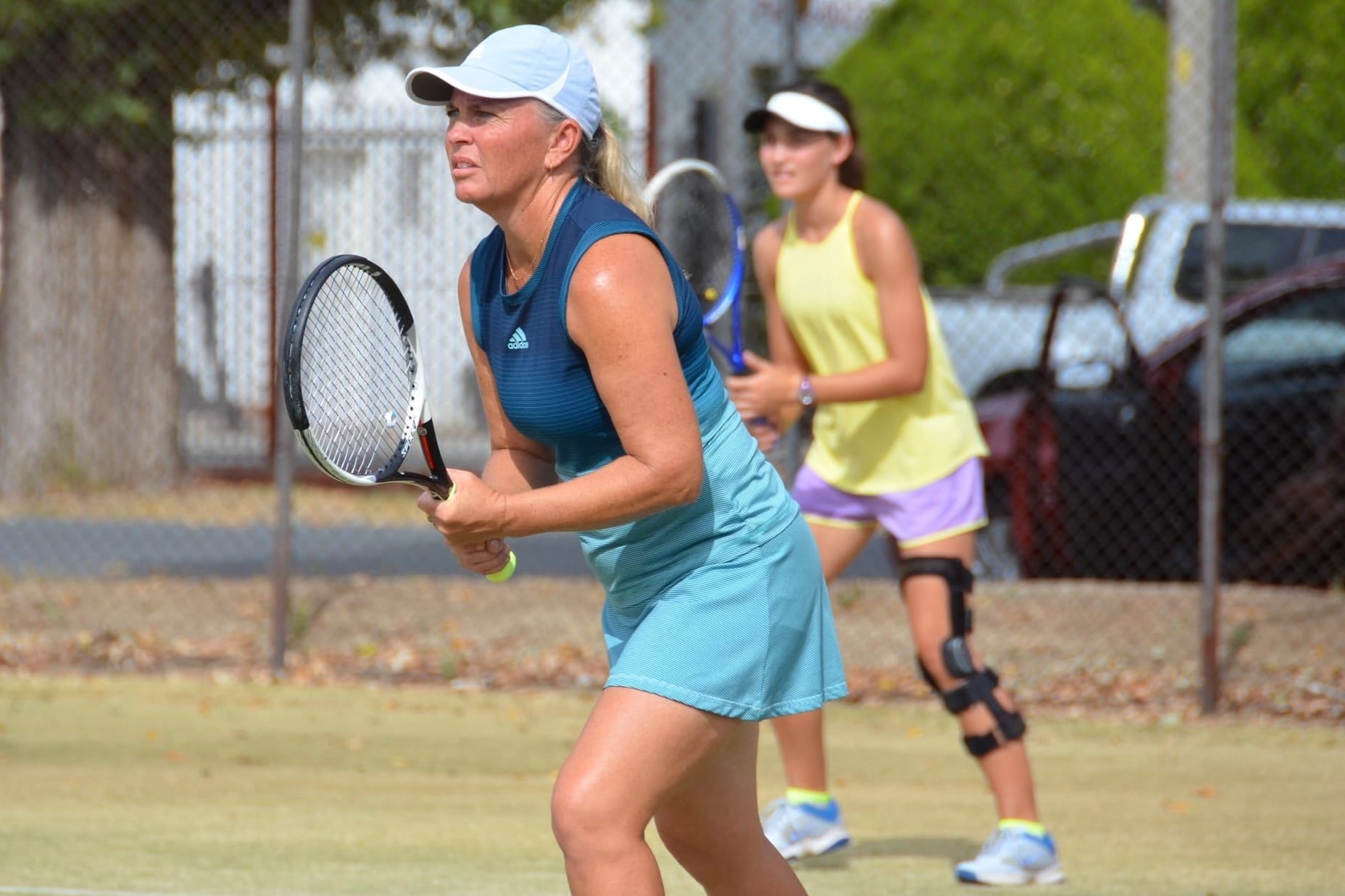
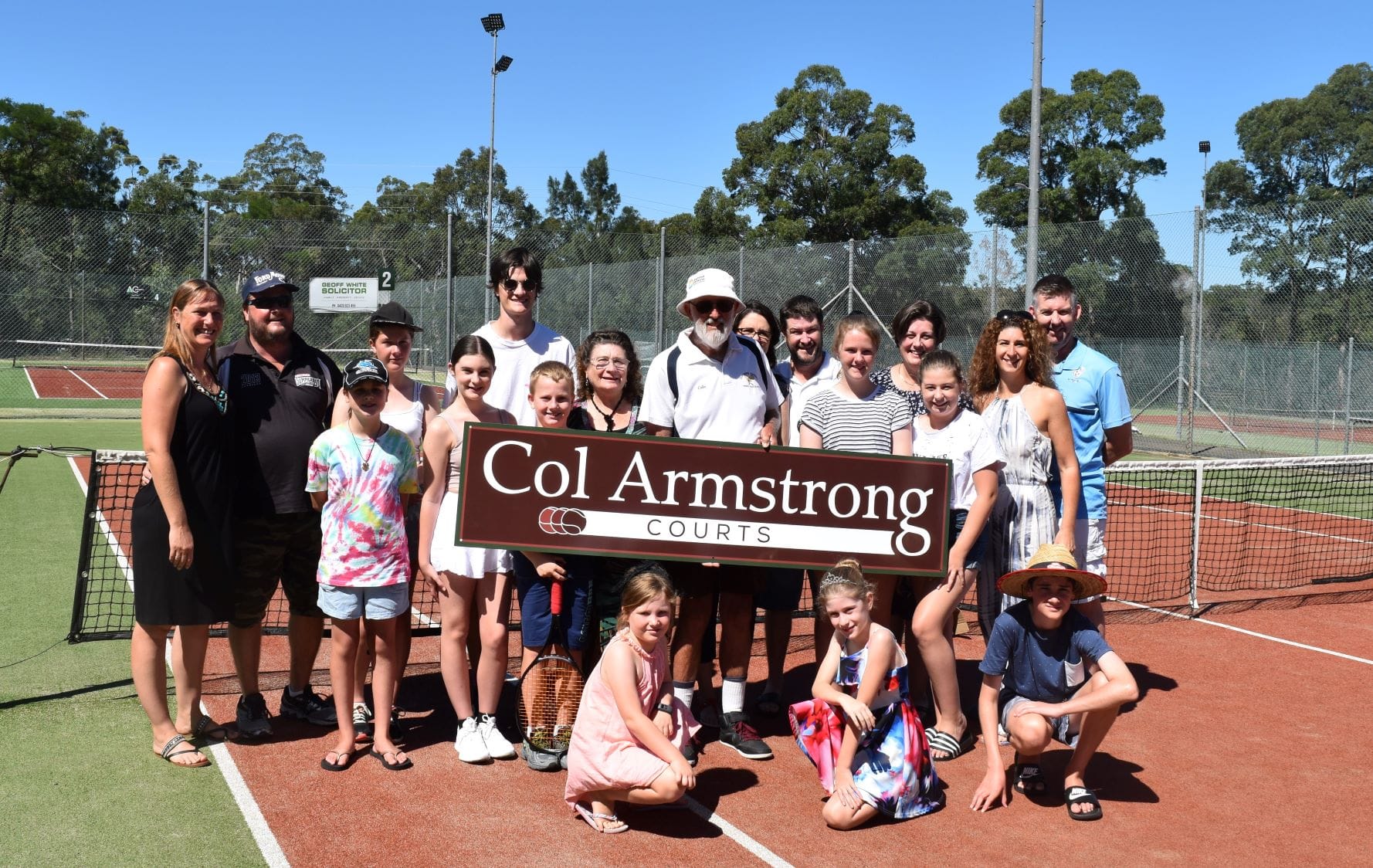
Tucked away from the highway next to bushland at the end of Narang Road in Bomaderry, the region's premier tennis club is a gathering place for every demographic and age group. Col Armstrong, 81, has played tennis for 70 years - 37 of them at these courts.
Armstrong is one of the club’s many keen seniors whose tennis addiction is about more than skill or fitness. It’s a chance to connect with old friends, meet new members and mentor eager young players.
“That's their outlet - they play their social tennis for an hour or so, then they have morning tea or afternoon tea.” Pritchard said of her club’s elder players.
However, the club’s deteriorating facilities are now demanding less matchplay and more fundraising.
A 45kg court light crashed to the ground in October, fortunately, late enough at night that no one was around.
With the courts in use every day and night, the risk of injury from such an incident is significant, and the light's demise highlights fears not only of physical trauma but also the club’s future.
“We’ve got up to 400 members and hold comps every night of the week,” said SDTA President, Steve Akehurst.
“We’ve lost four courts now, so we’re limited on how many players we can have per competition”.
As Shoalhaven’s sport facilities crumble, so too does community health and social cohesion, which is why Gilmore MP Fiona Phillips committed in October to help and urged Shoalhaven City Council (SCC) to step up too.
"I spent a lot of time on these tennis courts as a teenager," Ms Phillips wrote.
"But...the courts, after 40 long years, need a major safety overhaul, new lighting and fencing.
"With 400 members, it’s beyond time for this to happen.
"Shoalhaven City Council should definitely be helping upgrade these important facilities."
However, the SDTA at Bomaderry has typically struggled to secure Council funding for its maintenance projects, with sources saying that several years of lobbying Council for funds have been unsuccessful.
That is despite the fact that the club has a long-held Occupation of Council Owned or Managed Land lease agreement with Council that states that 100% of that lease income for the tennis courts “will be set aside in a sinking fund and applied towards capital upgrades of that facility.”
A key player in liaison between sporting clubs and Council, especially over infrastructure spending, was previously the Shoalhaven Sports Board (SSB).
But that body was paused in November 2023 and was officially eliminated on Sept 23 this year following a Council vote reasoning that the SSB's activities could be conducted effectively and efficiently without an external committee.
Spark contacted Shoalhaven Council last week for clarification on the availability of the funds that, according to Council policy, should have been saved from many years of SDTA lease payments.
The reply email stated that Council was now working with the club to "identify the scope of works for this project" before the procurement of tenders.
"Council is working with the Shoalhaven District Tennis Association to confirm a funding solution for this project. At this stage, the parties have reached an in-principle agreement to invest funds available in the Restricted Asset Account for Narang Road Tennis Courts in the lighting replacement project. Alternative funding solutions are under investigation to fund court upgrades."
Down the coast, Ulladulla's tennis centre was upgraded (lights, resurfacing, nets) in 2023 to the tune of $750,000 jointly provided by the Australian Government and Shoalhaven City Council.
Ulladulla's centre also has a significant clubhouse and plenty of shaded or open areas to gather, watch matches and socialise.
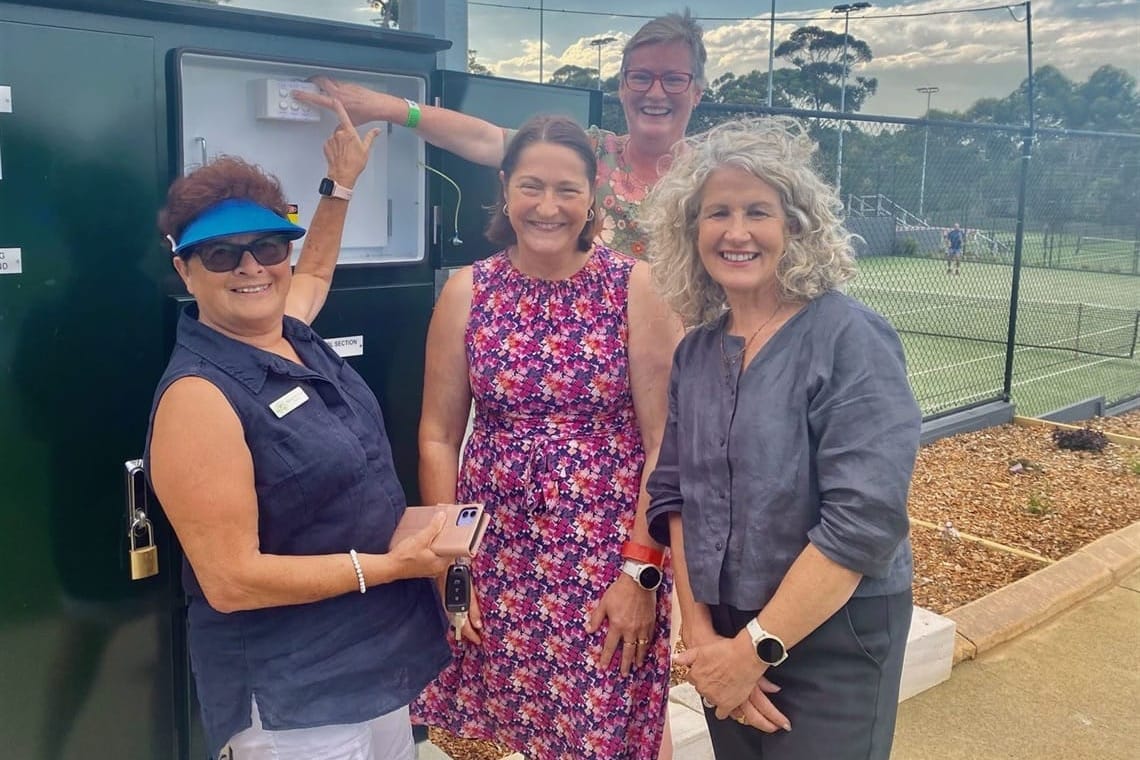
But it does not host as many players and night competitions as the Bomaderry tennis centre.
Greg Wellington, a former member of the Shoalhaven Sports Board, Bomaderry Cricket President, Shoalhaven District Cricket Association Vice President, and Nowra-Bomaderry Jets RLFC Vice President, said the absence of a sports board to advocate to Council on behalf of community sports groups meant spending decisions risked becoming politicised or delayed.
Wellington also said that Shoalhaven was missing out on substantial business stimulus from lucrative sports tourism events that are growing in popularity and could be hosted locally.
“Sports tourism is a major economic benefit…$20 million was spent at Tamworth’s Rugby League Knockout event," Wellington said.
Councils elsewhere have indeed capitalised on that trend.
The AUSSIES 9-day national surf lifesaving competition on the Sunshine Coast, in 2024 attracted more than 15,000 visitors to the region, and that local Council estimated the event contributed $25 million to the Queensland economy, with $20.7 million injected in the Sunshine Coast region.
But it's not only large beachside destinations that benefit from sports tourism.
In Western NSW, Dubbo Council partners with local businesses to target major sporting events because of proven economic boons.
In just the first few months of 2023, according to a Dubbo Council report, sponsored events delivered more than $10 million into that local community, with the NSW Touch Football State Cup alone making a $7 million impact.
An Indigenous Shoalhaven sportsperson and Koori Knockout manager, Wellington considers sport “the great equaliser” and fears the detrimental consequences for a community that loses sports funding, facilities, and players.
“It's really a social issue — more crime, unemployment’s going to be an issue, vandalism, drug abuse,” Wellington said.
"Sport also provides pathways to success for disadvantaged Aboriginal youth.
Australia’s national Sport Policy emphasises that sport is not merely a drain on financial resources, but a solution to the most entrenched social problems.
The Australian Sports Commission found in a study of the Value and Benefits of Sport that:
“Aboriginal and Torres Strait Islander youth who participate in sport are 3.5 times more likely to report good general health and 1.6 times more likely to have no probable serious mental illness”.
Accomplished Shoalhaven cricketer, community sport advocate and inspirational indigenous leader, Kealan Blattner, talks to student journalist, Parri Barrel, about how to make the game matter on and off the field, whether it’s home in Bomaderry or far from family in England.
But it is the actual playing of sport at the community level - not buying expensive tickets to be a spectator at an elite competition - that influences productivity most powerfully.
A Medibank study estimated physical inactivity costs Australia $13.8 billion due to impacts on healthcare, early mortality and workplace efficiency. It found that playing sport decreased the risk of cardiovascular diseases, chronic diseases and symptoms of anxiety and depression.
In between Pritchard Academy coaching programs, training squads, nightly competitions and school tennis programs, the tennis centre at Bomaderry previously hosted large state-level tournaments that attracted athletes from across NSW as well as some international visitors.
Vicki Pritchard and the dedicated SDTA volunteers are holding firm on their vision to rejuvenate Shoalhaven’s largest tennis centre to a standard high enough to host multi-day ranking tournaments again.
“I will just keep fighting and hopefully start to get somewhere,” Vicki said.