Toxic City: Asbestos, Amnesia, and the Collapse of Care
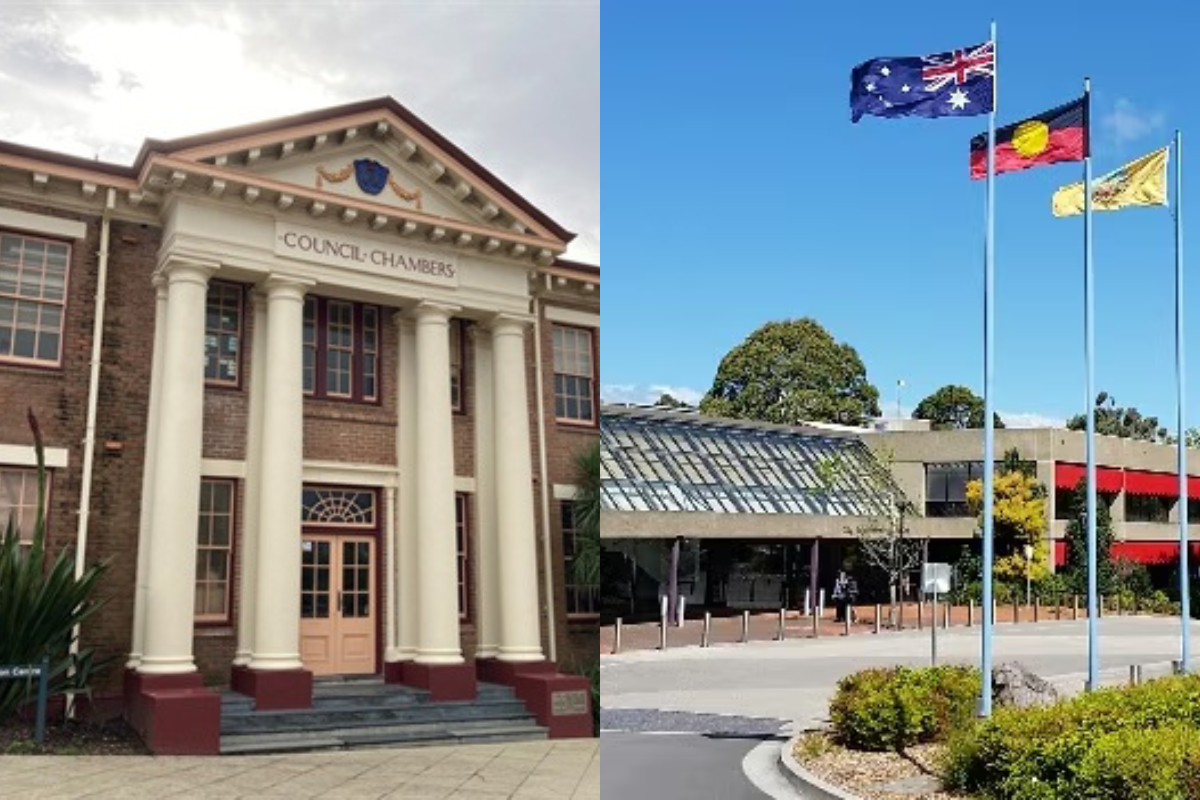
When Shoalhaven City Council abruptly shut down its own chambers last week over fears of asbestos in the air-conditioning, a deep and dangerous wound reopened in our community.
The response was fast. The risk management was decisive. And the hypocrisy was breathtaking.
By contrast, a powerful few - including Shoalhaven's current Mayor Patricia White and her most recent CEO recruit, Andrew Constance - have long known about a vastly larger asbestos scandal compromising some of Shoalhaven's most sensitive and significant places.
They heard the community outrage. They read the facts. They had the chance to back an investigation. But they actively ensured nothing was done.
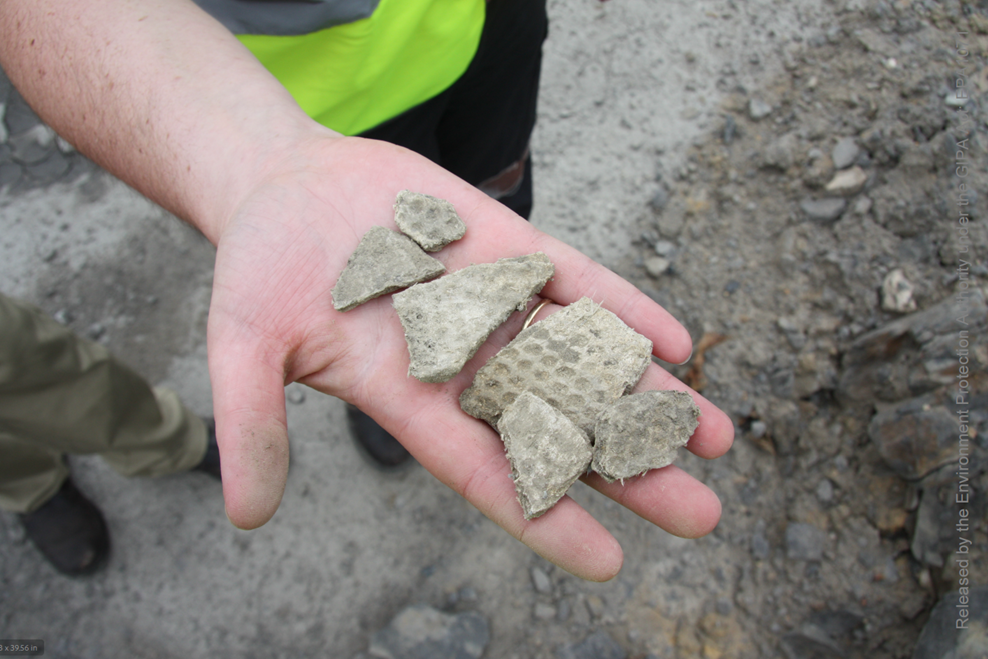
For a decade, engineers, builders, researchers and a few politicians have campaigned for the clean up of commercial quantities of asbestos - and other carcinogenic material - illegally dumped in a quarry in Tomerong.
Those poisonous deposits were not accurately recorded, but the material was transported and buried beneath local roadways, potentially exposing workers, residents and streams that flow into Jervis Bay Marine Park.
Local whistleblowers have provided oversight agencies with extensive data, photographic evidence, and historical records that demonstrate either ineptitude or corruption regarding environmental health and government accountability at Tomerong Quarry.
But the unholy matrimony between vested interests and regulatory capture is a bond stronger than bedrock.
Settle in. Tomerong is a small village carrying a heavy burden, and this story lives in details buried where people were never meant to look.
Rubbish, Roads and the Price of Silence
by Peter Allison (editing: Cat Holloway)
When I confront people with disturbing facts about asbestos in Tomerong, they naturally ask: 'What’s your agenda?'
I am a former Shoalhaven resident, a retired builder with extensive civil engineering experience, and I was the President of the Tomerong Community Forum (TCF) from 2010-2019.
I no longer live in the area. I have no political affiliations or financial interests there.
I gain nothing personally by persisting with this issue — except sleepless nights.
My mother died from mesothelioma 40 years after she was exposed to blue asbestos fibres. Since then, I’ve had little tolerance for official indifference.
While serving as TCF President, I was informed that families living along the local quarry’s haul route were buying bottled water because they feared that persistent dust from the quarry and trucks was contaminating their rainwater tanks with asbestos and other toxins.
Imagine, as a parent, being unable to trust the water coming off your own roof and into your taps. Imagine what that fear does to chip away at a family’s sense of home and safety.
There were no wheel washing machines at the quarry, and there was no dust suppression on site.
Not only did this pose a risk to residents, it also affected council workers exposed to the product on the road.
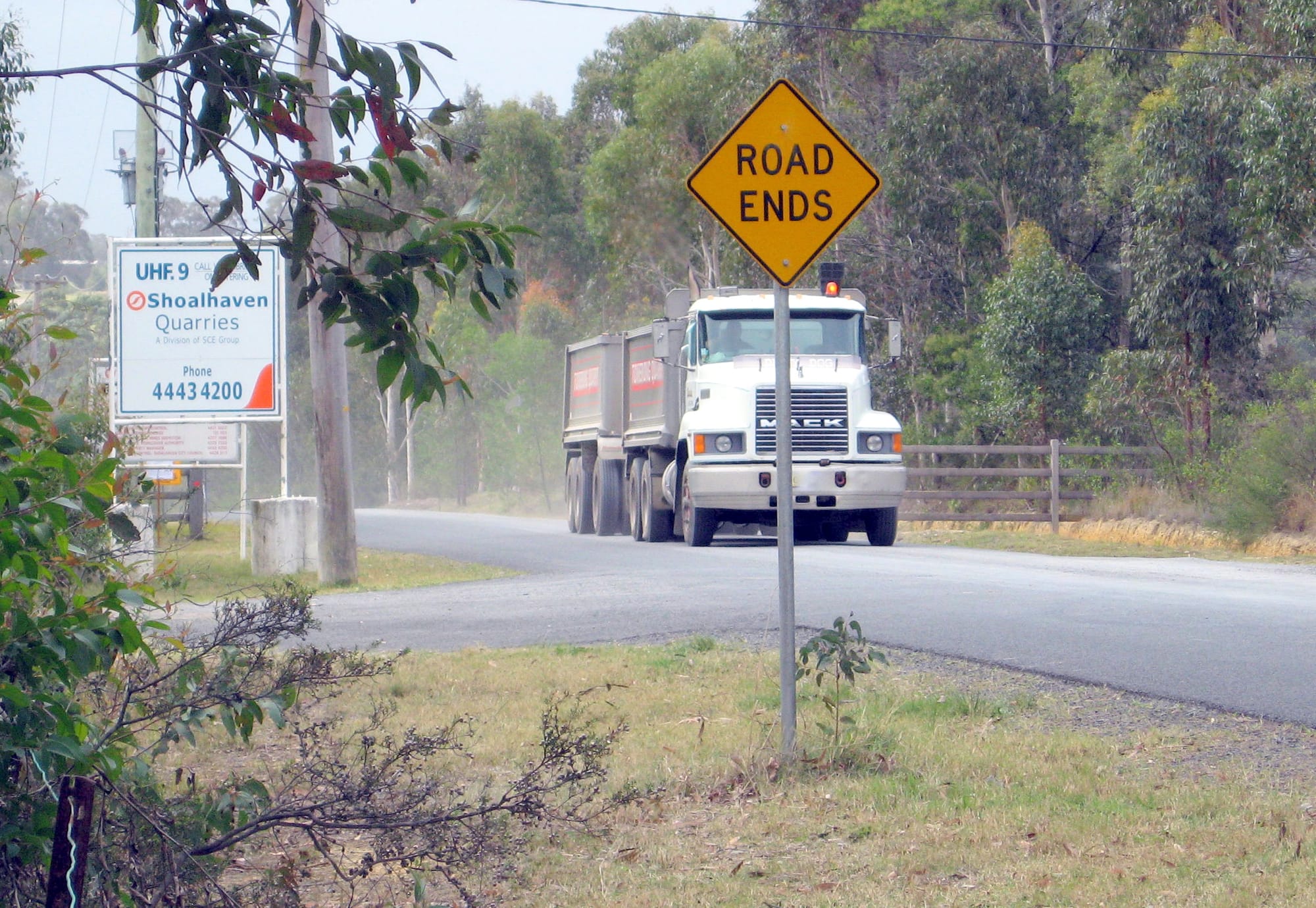
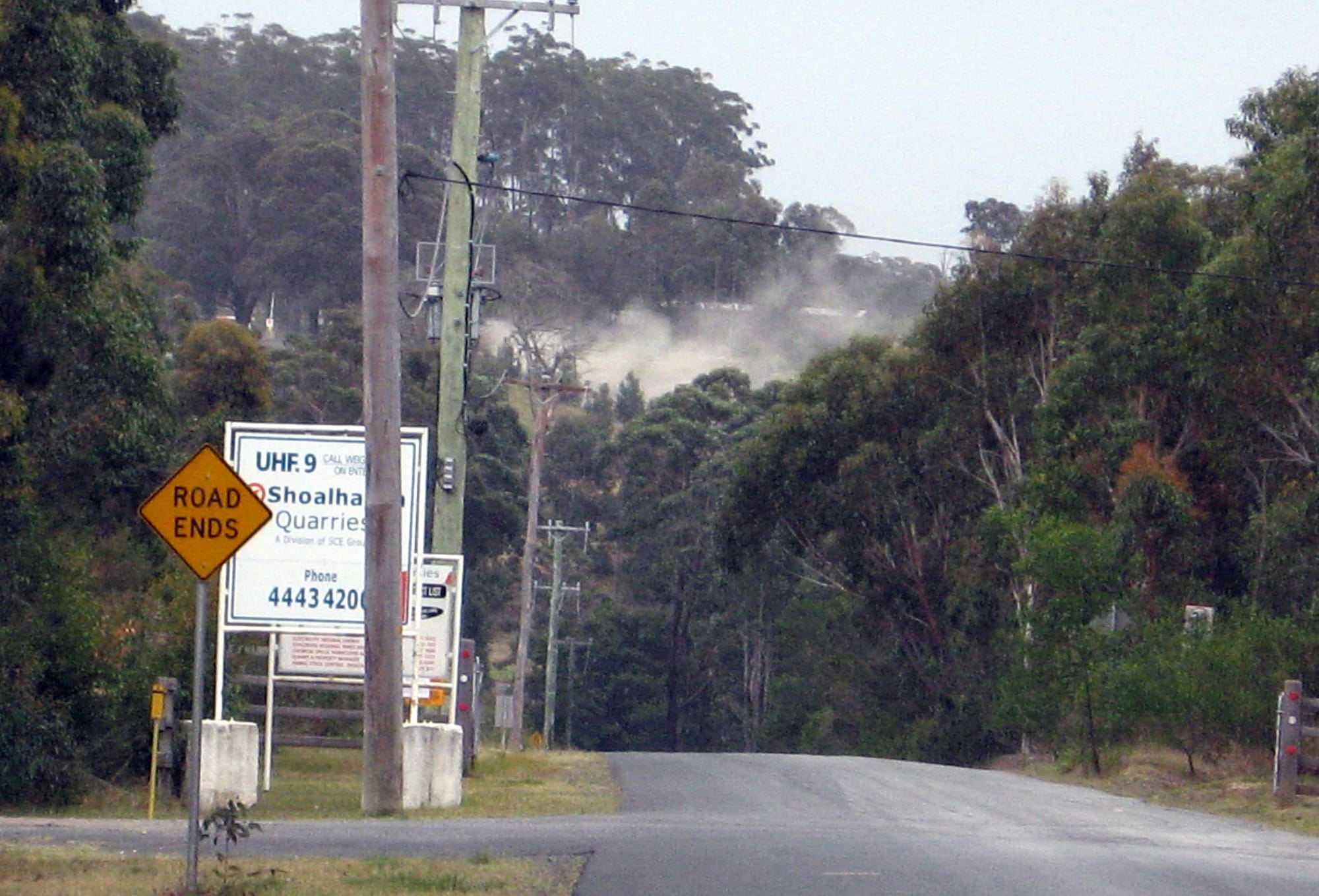
Families living along the local quarry’s haul route were buying bottled water because they feared that persistent dust from the quarry and trucks was contaminating their rainwater tanks. click images to enlarge
TCF forced the issue and successfully prompted the Council, Department of Health, and NSW Environment Protection Authority (EPA) to test affected residents' tank water. But testing did not begin until over 12 months after the quarry stopped operating in July 2017.
That delay is indicative of a broader pattern of institutional deflection or cover-up and a steady grinding down of the people who refuse to accept that there is 'nothing to see here.'
Eight years on, the asbestos is still there.
Tomerong quarry also allegedly received commercial quantities of asbestos waste intended for Kemps Creek waste transfer station, but dumped on the Tomerong quarry property.
Our small team of researchers and community advocates reported these concerns in March 2018 to Federal MP Shelley Hancock, who said Shoalhaven Council was responsible for handling it.
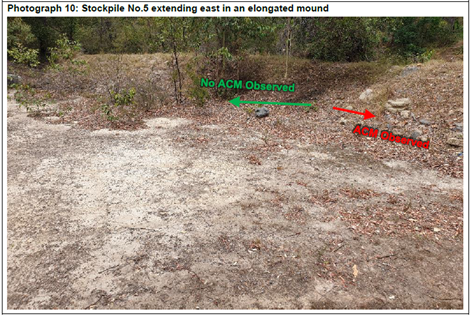
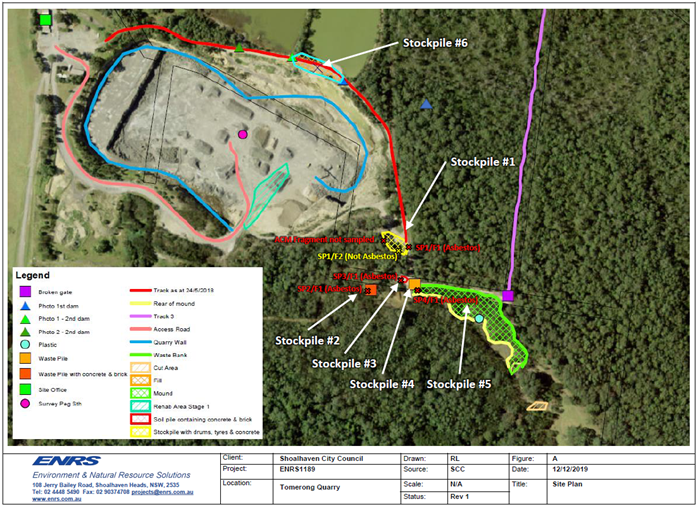
Council was notified the next day in formal reports with a map indicating where the asbestos was believed to be buried.
Council took 19 months to enter the property, despite having an automatic legal right of entry.
Asbestos was found in 5 out of 6 test holes.
Why did it take inspectors so long to enter the premises? You could be forgiven for wondering if that gave the quarry operator time to hand back DA’s and licences to the unsuspecting landowner, or deregister companies to avoid responsibility.
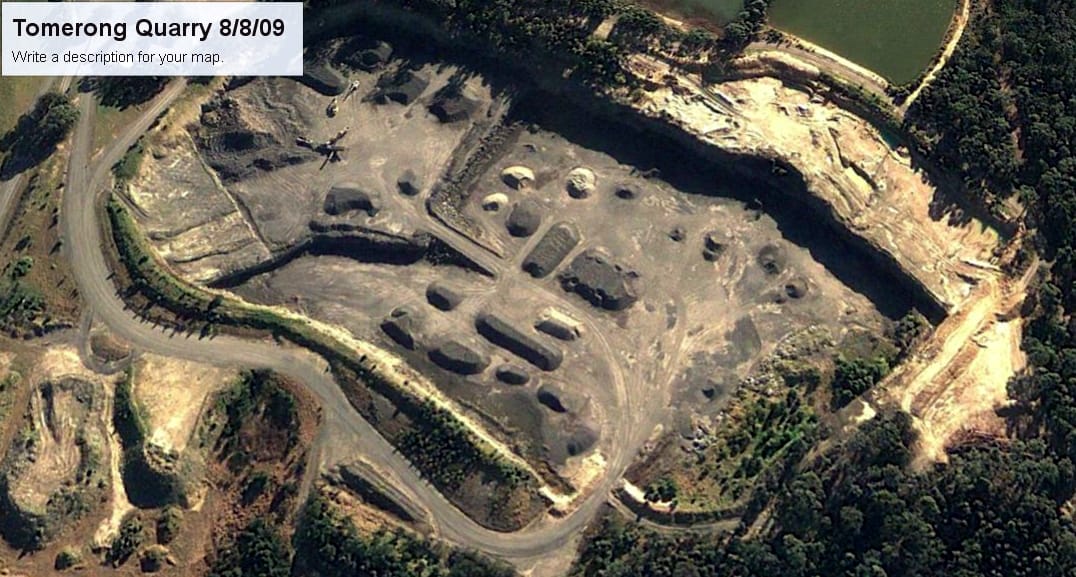
A further concern is that a dam on the quarry site was illegally constructed on the ‘old soak’, which is part of the aquifer that forms the headwaters of Duck Creek.
This waterway flows through multiple private properties into Moona Moona Creek, and ultimately into Jervis Bay Marine Park.
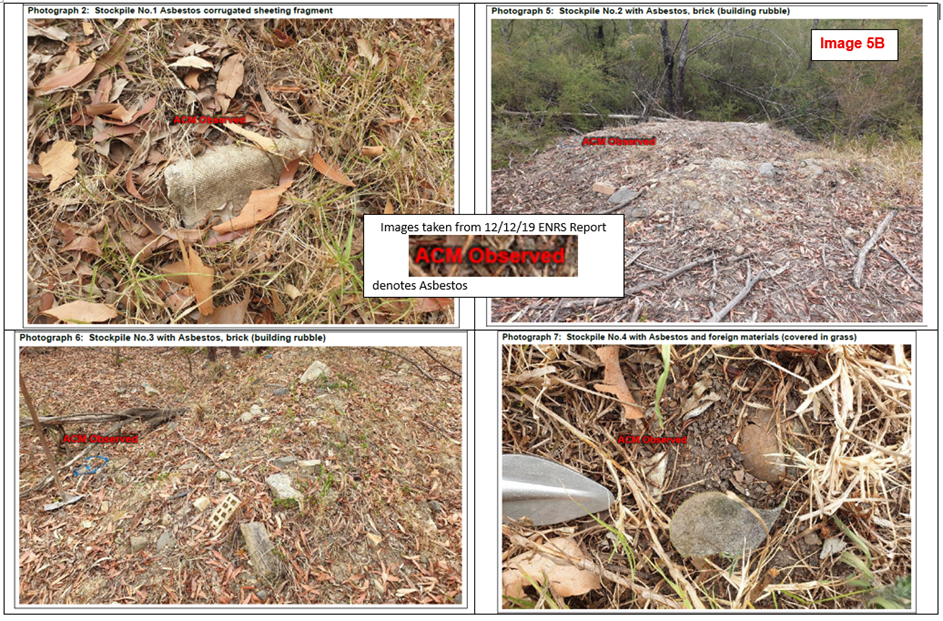
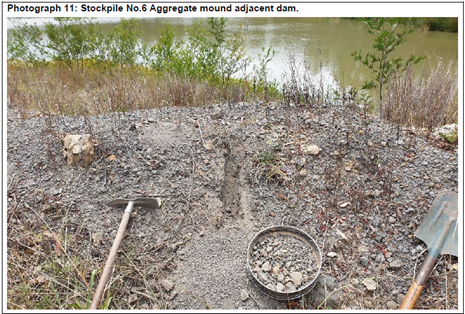
click images to enlarge
During the 2024 Gilmore election lead-up, former Shoalhaven Councillor, John Levett, and I discussed this with Liberal candidate Andrew Constance. Levett attended a follow-up meeting in October 2024 with Constance, Mayor Patricia White and then-Shoalhaven Council CEO, James Ruprai.
Constance lost that election but later won the role of Council’s latest highly-paid CEO.
But Tomerong’s ratepayers are yet to hear from him or Mayor Patricia White on this unresolved asbestos dumping case.
It would at least be good to know if Council is meeting recognised environmental safety standards of regular air-quality monitoring and soil inspections to assess the asbestos identified on land adjacent to the quarry extraction area.
Such care is essential to ensure that asbestos does not re-emerge or become airborne, posing a risk to the surrounding community.
I am taking my concerns directly to the public now, because every official door has been closed.
Over many years, our team has submitted numerous letters and reports, meticulously sourced with evidence, to Shoalhaven Council, the Office of Local Government (OLG), the NSW Ombudsman’s Office, and the Independent Commission Against Corruption (ICAC).
We have also written to two State MPs and the NSW Health Minister, but none have responded.
We have tried to use the appropriate channels of democracy, oversight, science, and representation, only to watch our concerns be dismissed as too complex, too historical, or someone else’s problem.
Ironically, in the same week Council decided to close chambers to investigate asbestos in the air conditioning, we received our 12th rejection letter from an official watchdog body— this time the NSW Ombudsman’s office — reiterating that the pollution at Tomerong Quarry is the responsibility of Shoalhaven Council, and that OLG had determined Council was appropriately considering it, and would 'continue to monitor the situation as required.'
Appropriate? I beg to differ.
But, if those with political and business clout got away with poisoning precious land and exposing innocent people, then maybe knowing how they did it will help us make sure it doesn’t happen again.
While a Shoalhaven Councillor, John Levett wrote in 2021:
“Tomerong Quarry will continue to enter the discussion when the subject turns to the lack of accountability in government.
“The controversy around the historic failure of Shoalhaven City Council (SCC) to enforce compliance at the Quarry looks set to continue…because of legacy matters that remain unresolved and questions that remain unanswered.
“The secrecy of Shoalhaven City Council around these questions is deeply concerning.
“A total of sixteen Questions on Notice have now been asked by elected Councillors since May 2021 regarding Tomerong Quarry and not one answer has found its way into a public document.”
The Tangled Web of Tomerong Quarry Political Players
After a history of shale extraction, Tomerong quarry was formally approved for extension in 1990 to supply sub-base road-building material.
But the quarry went into liquidation and was purchased by Greg Todd for $780,000 in a 1994 mortgagee sale.
The quarry employed seven people and mainly supplied Shoalhaven Council and new subdivisions with assorted gravel for constructing roads.
But, by 1998, Todd had sold the site for $1.4m to the Commonwealth Indigenous Land Corporation for lease to the In-Ja-Ghoondji Lands Incorporated, an entity established to provide income and housing to Indigenous families.
Curiously, Todd then leased the quarry and 282ha property back from the In-Ja-Ghoondji.
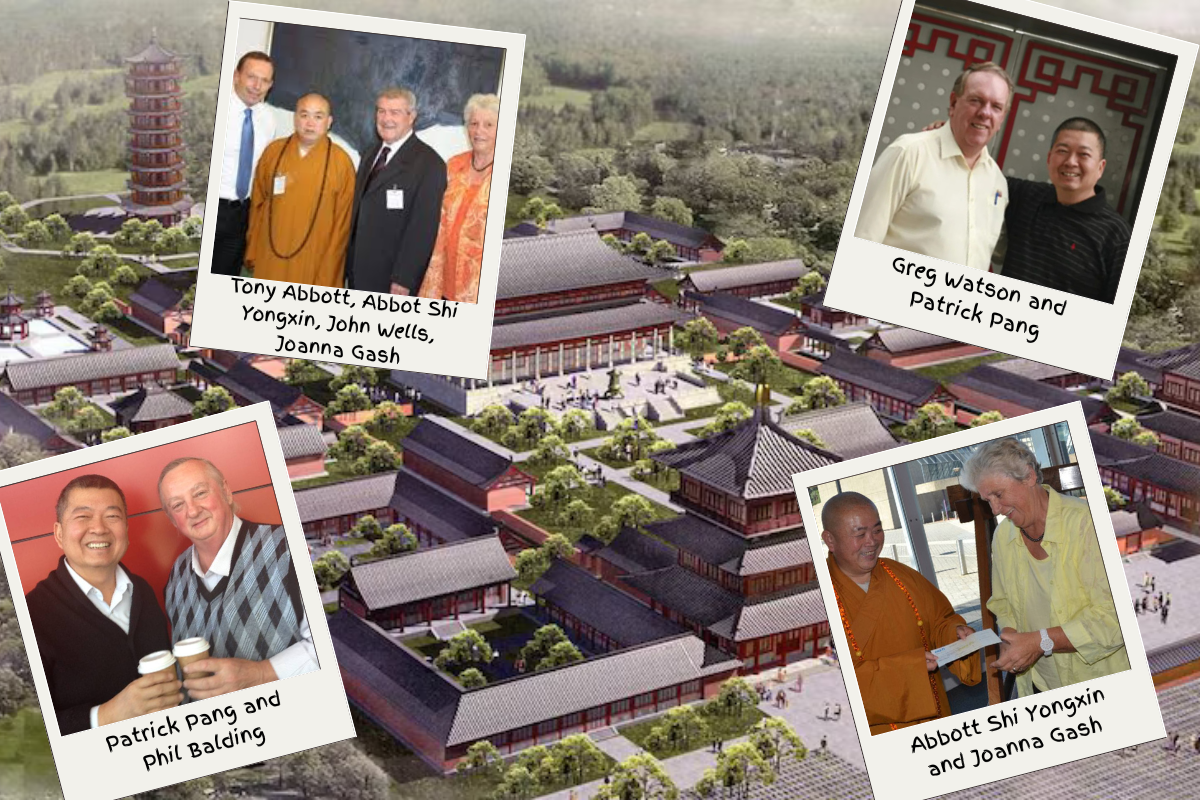
The president of In-ja-Ghoondji Lands Incorporated, Darren McLeod, and Federal member for Gilmore from 1997-2006, Joanna Gash, were known associates of Todd.
Records show the In-Ja-Ghoondji donated to Greg Watson’s Shoalhaven Independents Group.
Todd and McLeod both held the positions of director and secretary for a company called Djung-Gah Holdings, along with a familiar business character in the Shoalhaven, Phil Balding.
Phil Balding was the accountant and financial advisor for the In-Ja-Ghoondji Lands Incorporated, as well as the accountant for the Shoalhaven Independents Group (SIG) and still the party's Returning Officer, having played a significant role in SIG’s political success over decades, including the election of SIG Mayors Greg Watson and Patricia White.
Of Balding's numerous Nowra region business interests, notable was his involvement in an implausibly enormous platinum fraud case that earned him the nickname 'Platinum Phil'.
Undeterred, Balding kept busy. Until 2016, the registered office of the Shaolin Temple Foundation Australia was Phil Balding’s accountancy office in Nowra.
That’s particularly interesting because the Shaolin Temple Foundation purchased 1200ha of land at Comberton from Shoalhaven Council for $5m - although it took the Chinese Buddhist cultural organisation nearly a decade to come up with the money.
Shaolin’s head monk, Abbot Shi Yongxin, who personally negotiated with Watson and the SIG-led Council to buy Comberton, is now on the run from the Chinese Communist Party over a sex scandal and charges of embezzlement.
That sale, enthusiastically brokered by SIG leader Greg Watson and his SIG colleague Clr John Wells, included Comberton’s hard rock quarry site as a sweetener to the land deal for a mere $500,000 extra on the orginal $4.5m asking price for the property.
If you think that sounds like a better deal than a free set of steak knives, you’d be right.
The sought-after sandstone and dolerite deposits at Comberton are now estimated by some to be worth nearly $1b.
Ex-Shoalhaven Council engineer, Peter Jirgens, told the South Coast Register’s Glenn Ellard that, before the Comberton sale, he was under political pressure and internal Council pressure to stop mixing clay with Comberton rock to create a high-quality roadbase, despite the fact that “there’s no better road-building material.”
What a pity for Shoalhaven, because the Comberton quarry sale to Shaolin rendered that valuable road-building material off limits to the Council.
But what a boon for Tomerong Quarry, which then went on to satisfy the road-building needs of Shoalhaven with Council as Tomerong quarry’s main customer.
That’s a dangerous partnership because Shoalhaven Council, was also the consent authority responsible for overseeing the quarry’s development compliance and enforcing wrongdoing.
Council deposited to Tomerong concrete from dismantled footpaths, kerbs, gutters and excavated road material — contrary to the quarry’s development consent.
The quarry lease was transferred to SCE-Aust (trading locally as Shoalhaven Quarries), a prominent Wollongong-based company that also owned quarries in the Hunter Valley region.
Under the directorship of Robert Newman, SCE-Aust had a contract with BHP to remove some 500,000 tonnes of slag, contaminated fly ash and other material from the company’s Port Kembla and Newcastle works.
In 2009, Todd and Newman teamed up to form a company called Tomerong Waste and lodged a development application for a non-putrescible tip at Tomerong Quarry that could receive contaminated slag, fly ash, and other toxic substances.
The community successfully campaigned against the tip and the application was rejected by the State Government.
But that did not stop such material being imported to Tomerong Quarry against consent conditions.
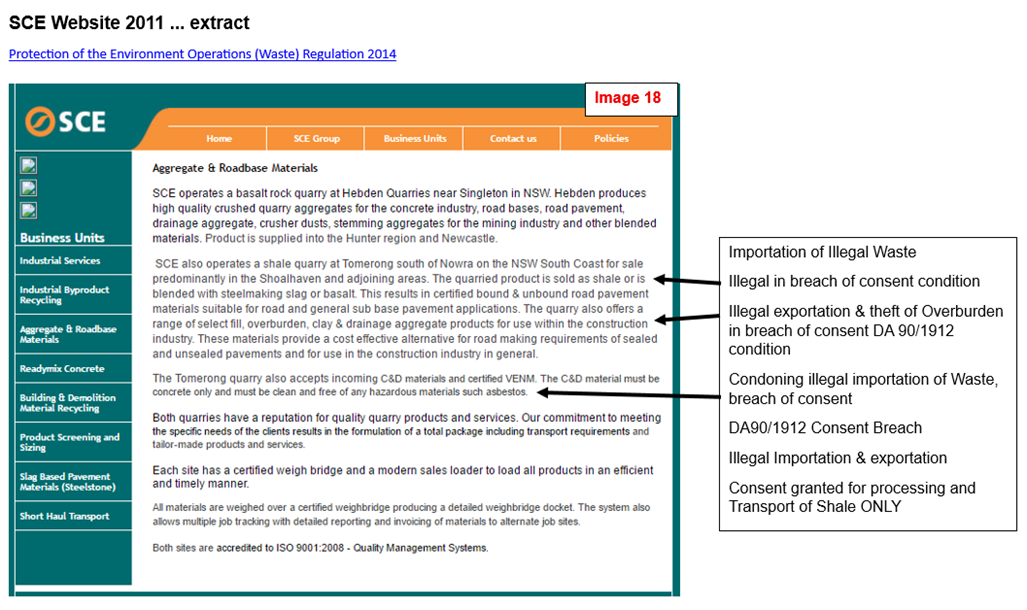
In fact, SCE-Aust advertised on their website in 2009 that Tomerong Quarry imported fly ash, slag, and other material to blend with road-making shale.
They also promoted the sale of ‘overburden’ material - a resource that was legally (as a condition of the quarry’s operation) required for eventual rehabilitation of the site.
Approximately 850,000 tonnes of this product were sold and would have netted millions in profits to the operator.
Records show that Shoalhaven Council bought some of this material.
Unlike the rock at Comberton quarry, sold by Council to the Shaolin Temple Foundation for a mere half a million dollars, Tomerong’s inferior material was deemed unsuitable for use under bitumen.
To achieve stronger road building material, Council turned a blind eye to Tomerong quarry’s illegal importation of slag, fly ash, quenos ash and asbestos.
Photographic evidence shows that the illegally imported material was later repurposed and sold for local roadworks with the Council’s knowledge.
Not only did those imports breach consent rules, the substrate broke down when wet, creating a chronic legacy of potholes.
Despite public demands that Council stop Tomerong quarry from importing carcinogenic material and selling rehabilitation material, Council failed to act decisively, as it was a customer and user of Tomerong quarry, operating against the very rules it was supposed to enforce.
No penalties were issued, but in August 2012 Council did instruct the quarry to cease selling overburden.
Investigations and Fines: Too Little, Too Late
In 2017, after years of community agitation, council staff finally investigated Tomerong Quarry with help from the EPA. But it proved too little, too late, as the quarry ceased operations that year.
Documents obtained under the Government Information (Public Access) Act, or GIPA, revealed that, just in 2015–16, more than 72,000 tonnes of waste material—nearly 2,000 truckloads—were imported illegally into Tomerong quarry, across 176 days.
Yet, Shoalhaven Council fined the quarry operator a meagre $16,000 for only four days and issued no fines at all for any illegal importation of materials between 2007 and 2015.
Council imposed what is termed ‘model litigant’ penalties on the quarry operator, as a more severe judgment would likely have led to cross-claims and expensive counter-litigation.
Councillors were not told about the findings until after the investigation was finalised and the minimal fines were issued. The investigation report was kept secret and sealed from public view under a claim of legal privilege.
Independent senator, Justin Field, addressed NSW Parliament on the Tomerong quarry as a textbook case of privatising profits while socialising costs.
“The community was furious that prosecution was not pursued, and the penalties amounted to only 5-10% of the maximum possible.
“These breaches include quarrying and exporting at rates far in excess of approvals, illegal dumping of asbestos, illegal importation of contaminated materials, illegal sale of overburden, failure to suppress dust, illegal construction of a dam and failure to build a required creek crossing.
“Since quarry operations ceased, the responsibility for the rehabilitation of the site falls to the In-Ja-Ghoondji owners.
“Should they prove unable to meet those requirements, Council can either pursue court action against them or complete the rehab work itself, ultimately costing the ratepayer.
“Residents have put the cost of replacing the sold overburden as high as $15 million.
“There remain serious questions about what has happened here - what were the circumstances that led to these calamitous compliance failures?”
Independent Senator Justin Field addresses NSW parliament about the Tomerong quarry and Shoalhaven Council debacle.
In 2017 South Coast MP Shelley Hancock pledged to act as a conduit between the community and the EPA over the concerns about contaminated drinking water.
"This is a story of ongoing, blatant flaunting of the rules," Mrs Hancock said.
But Hancock’s influence apparently didn’t extend to Shoalhaven Independent Group leader and former Shoalhaven Mayor Greg Watson, who orchestrated a cadre of SIG councillors to quash an external investigation.
Meeting Merry-Go-Round: Vote. Rescind. Shift blame.
In May 2018, the Strategy and Assets Committee of Council met, and a motion was carried to initiate an independent external investigation into the quarry disaster.
Almost everyone voted in favour of an investigation, including Clrs Bob Proudfoot, Jo Gash and Patricia White – Greg Watson condemned the investigation as a ‘witch hunt’.
I presented a deputation to the meeting and remember Clr. Proudfoot vowing to follow through after congratulating me on the informative presentation, and the Tomerong community on its tenacity.
Patricia White, whose regular attendance at the Tomerong Community Forum was well documented, acknowledged that many times and over many years, the community had called for Councillors to finally act on the residents’ behalf.
But the community’s joy was short-lived as a rescission motion was launched within a week, and the external investigation was voted down in June by Watson’s SIG and Team Gash Councillors, including Proudfoot and White, who all suddenly changed their minds.
Mayor Amanda Findley and Clrs John Levett, Kaye Gartner, Nina Cheyne and Annette Alldrick stuck with their vote for an external investigation.
Patricia White went hard on local media, claiming it was the writing of the Terms of Reference for the investigation by Mayor Amanda Findley’s, instead of the CEO Russ Pigg, that spelled the end of the action.
Findley responded calling White’s critique “misleading rubbish”. Since Russ Pigg was Council’s CEO, he was obliged to distance himself from setting the goals and boundaries of the investigation into the organisation.
In an email to me after the rescission vote in June 2018, Findley apologised for what she described as a “get the Mayor fiasco” and said she was certain justice would prevail.
“Every one of those seven councillors who voted against the Terms of Reference (TOR) knew that was what they were going to do three days after they accepted the independent investigation. It wouldn’t have mattered what the TOR said or how it was done, the answer was still going to be the same.”
John Levett was the Councillor who led the charge to provide closure for the Tomerong community, and he has continued to pursue State officials for justice, writing to the Minister for Local Government, the Office of Local Government and the NSW Ombudsman’s office as recently as November 2025 about chronic corruption risk in Shoalhaven Council.
Levett said ‘the decision to bin the inquiry was a pivotal one in the history of Shoalhaven Council.’
“I have no doubt that Clr Watson was, for reasons we can only speculate on, lobbying behind the scenes to sink the inquiry.”
“Clrs Findley, Cheyne, Gartner and I met informally in the Mayor’s office when Clr Watson appeared at the door and, in no uncertain terms, urged us not to proceed with the investigation… adding words to the effect: “Believe me, you do not want this inquiry.”
“The failure to enforce compliance at Tomerong, the coverups, the lies, and the reputational damage to Council has created an unstable environment which has brought about the early departure of three CEOs and may yet claim a fourth.”
Council’s CEO during this period, Russ Pigg, wrote to the Tomerong Community to apologise for the investigation being quashed.
“No doubt you would be disappointed that council did not agree to commission an “independent investigation”; however, you are also aware, I am sure, of other authorities such as the Ombudsman or ICAC that you may wish to contact should you believe that some form of further scrutiny is necessary.”
We followed that advice, but it has achieved nothing.
Roads, Profits, and Poison: Why does this still matter?
Shoalhaven’s roads now require an estimated $280 million to bring them up to standard. While health and environmental risks still surround the disposal of toxic and carcinogenic material in Tomerong quarry.
The CEO acted swiftly regarding the asbestos in the Chamber.
But no actions have been taken over asbestos in Tomerong quarry and the financial burden the In-Ja-Ghoondji landowners are facing because of the Council’s failure to enforce compliance.
This is no longer about Tomerong quarry, or Comberton. It is about what happens when institutions exist primarily to protect themselves.
If authorities are allowed to escape scrutiny—if asbestos can be buried, ignored, and forgotten simply because time has passed—then it will happen again.
And next time, it might be your street, your water, your family.
The poisoning of Shoalhaven is not only about what seeps into streams or hides beneath contaminated soil.
The rot is deeply embedded in the Council itself - in decades of secrecy, unethical partnerships, favours for friends, missing records, contempt for ratepayers and residents, and a reckless tolerance of environmental harm.
We see it today in Council’s poor controls over extractive industries, in its paving the way for landowners to clear forests containing threatened and endangered species and in its support for developers with questionable backgrounds and unorthodox business alliances.
None of which is good for growing a sustainable, reputable Shoalhaven.
The recent asbestos scare closing Shoalhaven Council chambers is a timely metaphor: unless the toxicity is confronted and removed, it will continue to infect yet another term of Shoalhaven City Council.
Whether that happens now depends on whether the Office of Local Government, the Ombudsman and ICAC are willing to fulfil their purpose of protecting the public from power that corrupts.